Grok Bot Isn't a Coworker. It's a Reorg.
Grok Bot Isn't a Coworker. It's a Reorg.
xAI's Grok Bot launch is being covered as another AI teammate story: an always-on agent with its own cloud computer, logging into your tools, doing multi-step work. xAI's own announcement describes something more specific than that: bots that work concurrently, hand off tasks to each other, and escalate to a person when a decision needs judgment, with one bot coordinating specialist bots across functions like recruiting, expense approval, and engineering. Early coverage and Bloomberg's report treat this as a product beta, and it is one. The coordination claims describe a design intent. I haven't seen a public account of this actually running a company's org chart at scale, under the kind of conflicting incentives that make coordination hard in the first place, and a launch announcement isn't evidence that it will.
Still, the design intent is worth sitting with. It isn't describing a better assistant. It's describing an org chart.
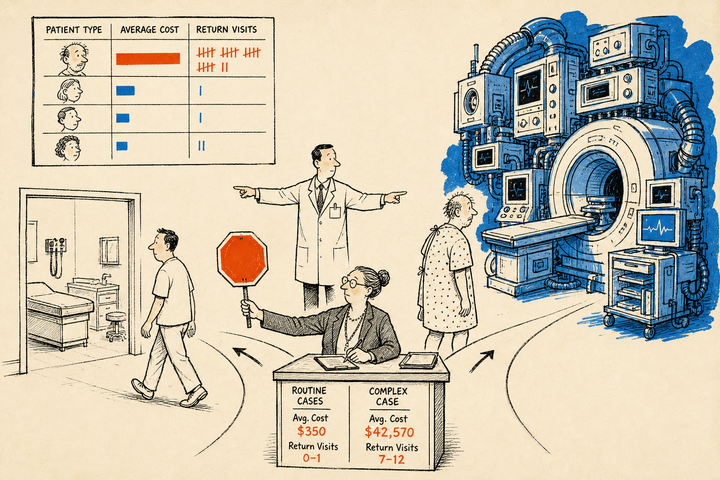
Coverage of a launch like this tends to ask whether the software can replace a specific job. That undersells the proposal. Take expense approval, one of the functions xAI names. A request sits in an expense tool, gets argued about in Slack because the policy is ambiguous, and gets escalated to a manager who has to open a project tracker to check whether the budget it's charged against still has room. The manager's actual job in that moment isn't judgment. It's reconciling three systems that don't talk to each other and don't agree on the current state of the world. If one bot can see all three, approve what the policy already covers, and only escalate what the policy doesn't, that reconciliation work disappears. Nobody's title changes. The clerical middle of the job does.
It doesn't all disappear the same way. When two teams want the same engineer's time next sprint, or two managers each think their project deserves the marginal budget dollar, the problem isn't missing information; it's a contested priority. A bot can surface that conflict faster. It can't resolve it, because resolving it means someone with authority decides whose priority loses, and that's a decision a company still needs a person to own.
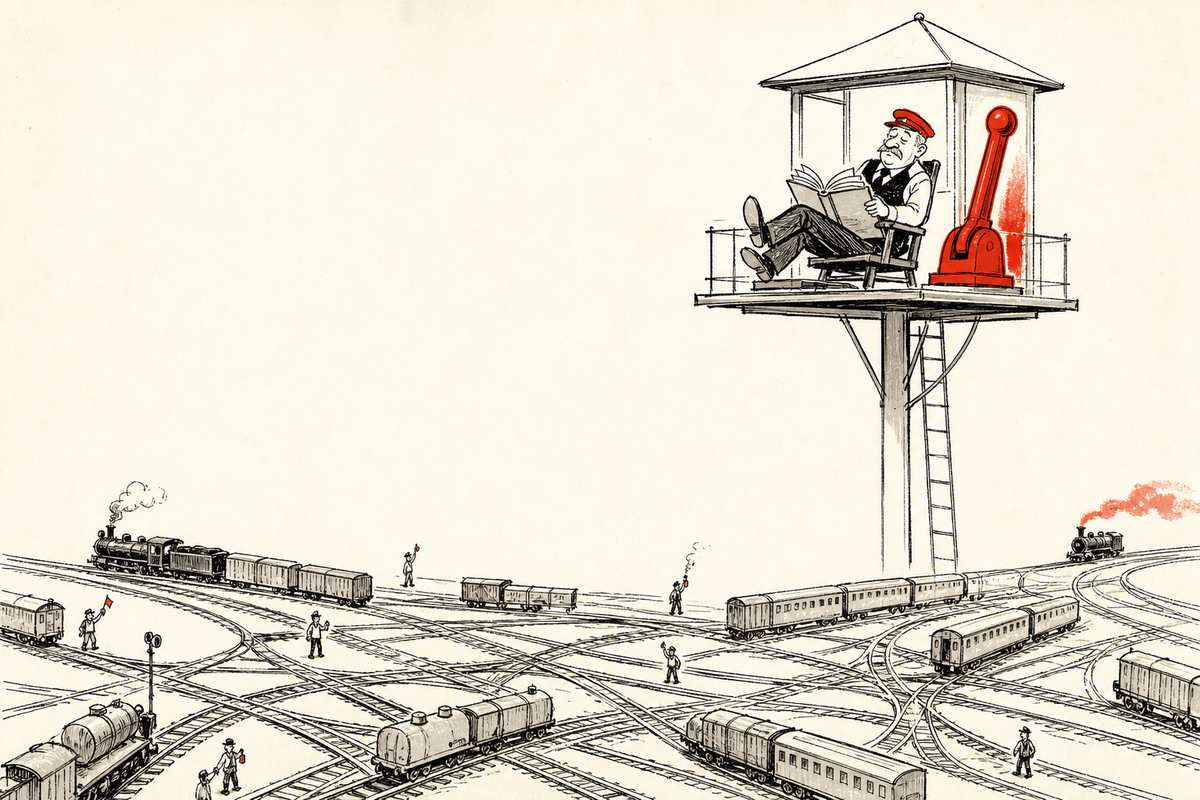
Where this goes, if the coordination actually works, is that a manager's job stops being remembering to check five tools and starts being deciding what triggers an escalation and which bot is allowed to act for them. Most managers have never had to write that rule down, because a human doing the coordinating could make the judgment call implicitly, case by case. Once a bot is making that call, the rule has to exist in writing, and someone has to audit whether it's still the right rule six months later.
That audit problem is where the real exposure sits. Say two bots both acted on a disputed engineering decision: one merges a pull request, one blocks a deploy, and a human is formally accountable for what shipped. Reconstructing what happened means knowing which bot had permission to do what, what it saw at the moment it acted, who it escalated to and when, and whether a person approved that specific action or just approved the general policy that let it happen without anyone watching. That is the specific thing the agent observability work is starting to chase, and it's the difference between having an audit trail and having a shrug when someone asks what happened.