AI Doesn't Need New Rules Yet. It Needs an Audit Trail
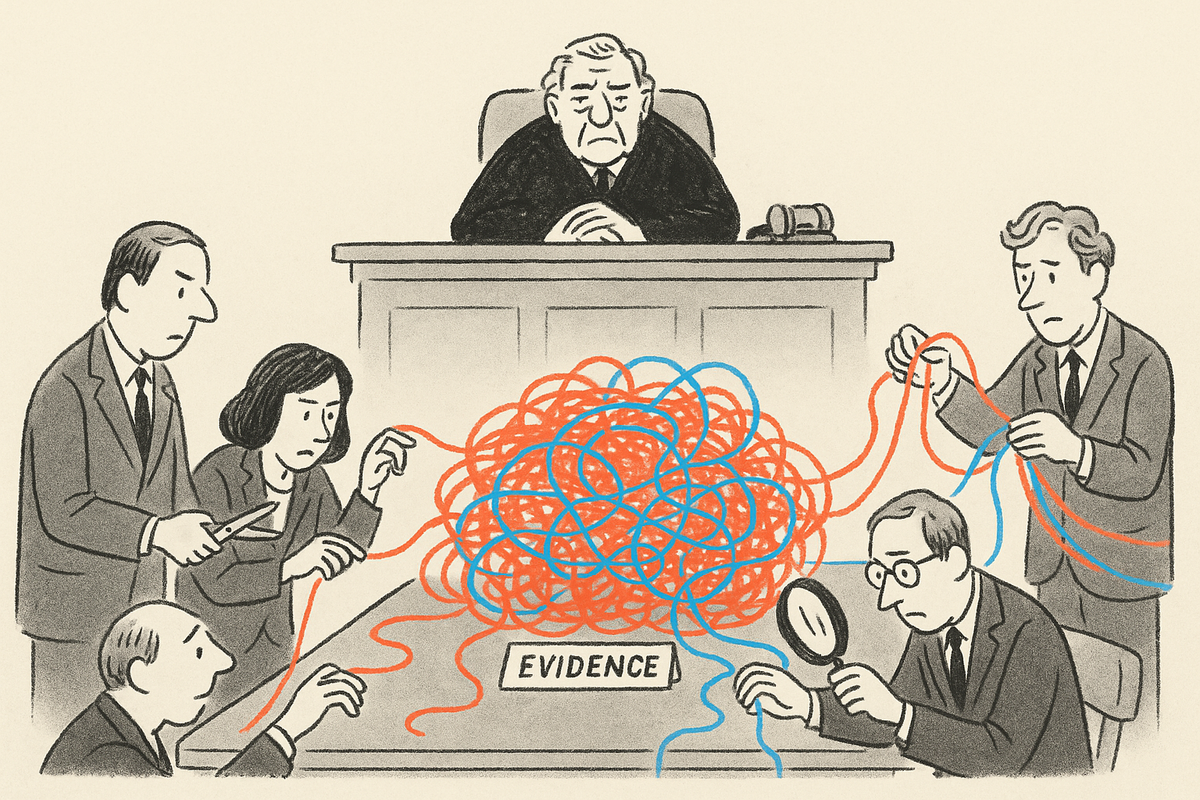
Steven Sinofsky recently argued that many AI harms may already be covered by existing law. Fraud, bias, negligence, copyright violations: all illegal before the first transformer was trained. He's right, but incomplete. The immediate problem is not missing prohibitions. It is missing evidence.
Existing laws become harder to enforce when you cannot reconstruct what an AI system actually did.
That requires an audit trail. A law means little if you cannot prove what happened, who caused it, and whether anyone should have seen it coming. AI systems make those questions harder to answer.
How AI Scatters the Evidence
Consider a bank's automated lending decision that violates fair lending law. An investigator needs to know what happened: the data that went in, which model version ran, what the retrieval system pulled, which business rule modified the output, who approved the deployment.
Each piece lives somewhere different.
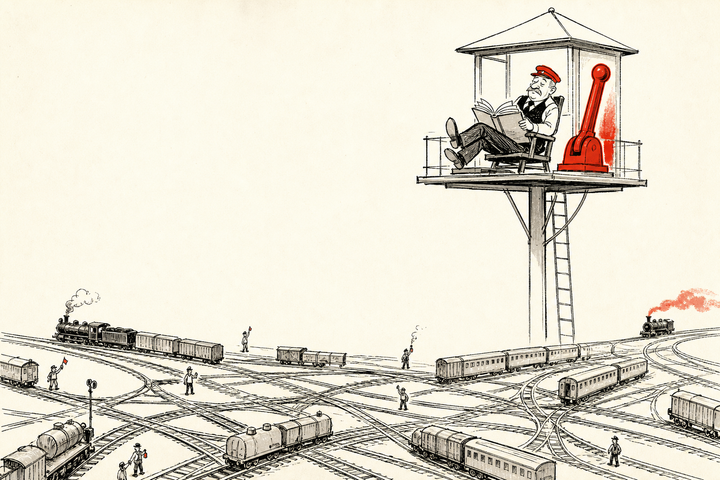
The model vendor ships the weights. The engineering team controls the database, the prompt template, the policy layer, the logs. The loan officer makes the final call. Nobody sees the full picture. When the decision goes wrong, blame diffuses across vendors, systems, and people with incomplete knowledge and competing incentives.
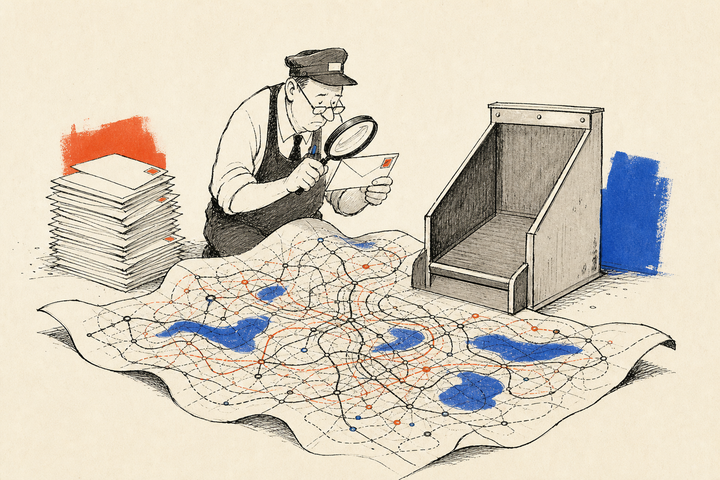
The obscurity comes from composition. A lending decision may depend on the loan officer's input, a system prompt, dynamically generated instructions, retrieved customer history, tool outputs, another agent's output, feature flags, policy decisions, model behavior, and human intervention. The rejected applicant sees almost none of it.
Model obscurity is a technical problem. Decision obscurity is an architecture choice. If a bank does not preserve what its retrieval system found, which model version ran, which policy rule fired, and who approved the deployment, it chose to make its own decisions hard to reconstruct later.
What a Useful Audit Trail Requires
Systems that make high-stakes decisions should keep:
Prompt logs with timestamps. Not just the final prompt: every change, injection, and policy block.
Retrieval sources and confidence scores. Which documents, embeddings, or database entries informed the output, and how strongly.
Policy overrides and their reasons. When the system blocked a recommendation or escalated a decision, who signed off and why.
Human approvals with accountable owners. Which person reviewed the output, what they saw, and what power they exercised.
Model versions and training dates. So you can reconstruct whether a failure mode was known at deployment.
Appeal paths that give the reviewer actual context. A button that says "request human review" does not help if the human cannot see the reasoning chain.
The audit standard should inherit from the industry's existing risk and rules. Financial services, healthcare, employment, and insurance already require reconstructable records of high-stakes actions. Those regimes should evolve to cover AI-mediated decisions.
If an industry already requires you to explain a consequential action, inserting an AI agent into that action should not make the recordkeeping duty disappear.
The same model can power a creative writing tool and a hiring filter. Oversight should follow what the system is permitted to do, not what it could theoretically do. An AI system that rewrites marketing copy does not need the same record retention as one that denies insurance claims.
The higher the stakes and the more independent the decision, the stronger the reconstruction duty.
Independence Does Not Erase Responsibility
An AI agent is not a new legal person that absorbs blame. Banks remain responsible for the systems they deploy and the power they grant them.
If a bank ships a bug that causes customers to lose money, nobody argues "the software did it." The institution built the system, deployed it, chose its controls, and accepted the operating risk. AI should not change that principle.
Independence should increase an institution's duty of care, not decrease its exposure.
This clarifies where existing law applies and where courts need modernization. Anti-bias law does not need rewriting. Court procedures need updating so plaintiffs can access prompt logs without multi-year discovery fights. Copyright law probably covers most unauthorized use. What may be missing is a standard way to trace which retrieval database supplied the copied content and whether the company deploying it should have known the risk.
The Foundation Beneath Future Law
Audit trails are not a replacement for future AI law. They are infrastructure required to enforce both today's laws and tomorrow's.
Future AI rules will themselves require evidence. If a statute says an independent agent may not perform some action, someone still needs to determine whether the agent performed it, which system did it, which version was running, what it received, what power it had, what the company knew, and whether appropriate safeguards existed.
Without a trace, even well-designed future AI laws become harder to enforce.
Customers increasingly demand explanations. Regulators expect answers. Legal risk grows with deployment scale. The question is whether you build it before or after the first lawsuit.
If a customer, employee, patient, or court asks you two years from now why your AI system made a high-stakes decision today, will you be able to reconstruct the answer?