Intelligence Is Commoditizing. Trust Is Not.
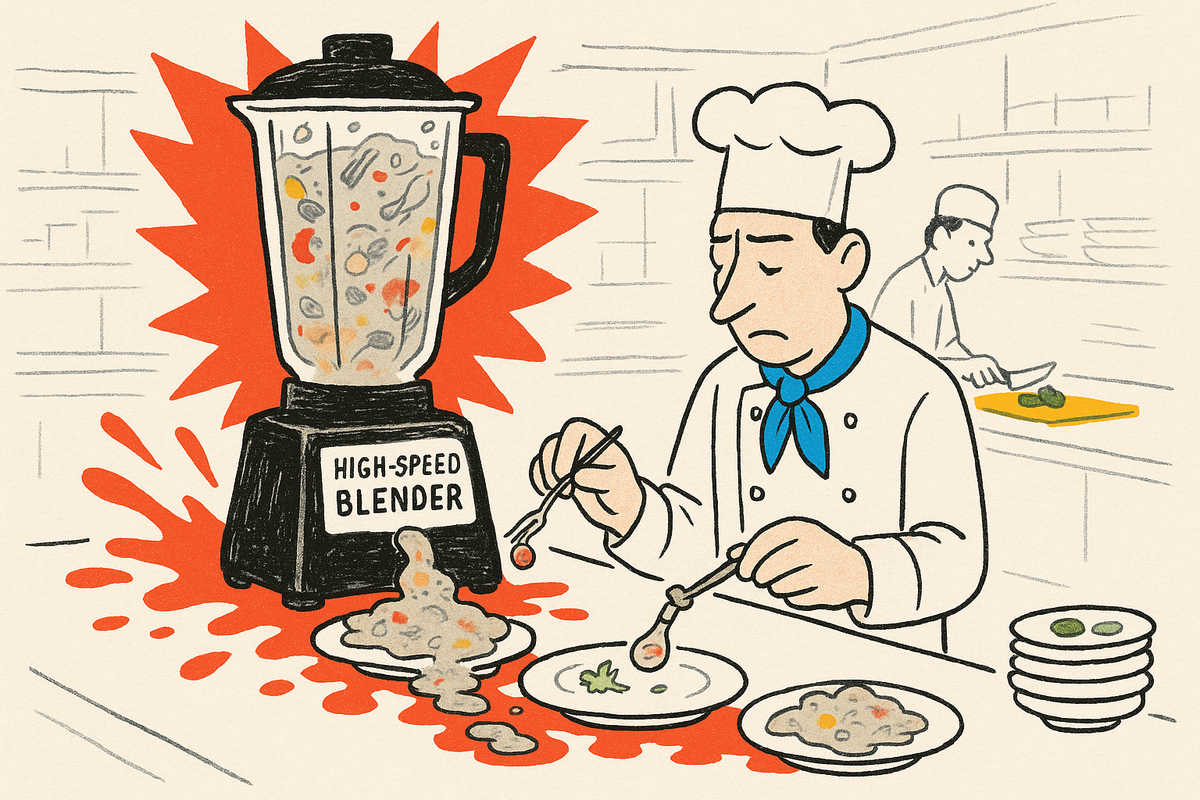
Model intelligence is becoming abundant. Trustworthy task completion remains scarce.
I have built enough hobby projects with AI to recognize a recurring pattern. You discover that a frontier model can seemingly build an entire application on its own, so you try to one-shot bigger and bigger pieces of the system. At first it feels magical. Then the AI slop piles up.
The structure becomes more tangled than it needs to be. Side effects appear out of nowhere. Libraries get pulled in for unclear reasons. Parts depend on one another in ways I do not fully understand. Eventually I lose track of my own codebase. Once I no longer understand what the AI built, I need the AI to fix what the AI built. Every fix creates another problem. The AI diagnoses its previous work, modifies it, introduces a new side effect, fixes that, and the whole process turns into whack-a-mole.
The inference may have been cheap. The syntax may have appeared incredibly fast. But the actual cost of the system includes my time understanding it, debugging it, keeping it running, fixing the structure, and repeatedly asking an agent to repair consequences of earlier decisions.
That is the kind of hidden cost most AI evaluation ignores.
The budgeting project
I had a real problem I wanted to solve. I spent hours sorting and labeling transactions in budgeting software. I imagined a focus mode inspired by the Claude interactive shell: the system would surface transactions one after another, AI would suggest the category and memo, and I could approve them rapidly. What took hours would take minutes if I could just press OK through a queue.
I explained the idea to AI, and the AI enthusiastically validated it. Then we built it.
The finished product was bad. The algorithm did not work the way I expected. The structure was awkward. The UI and interaction model were worse than they sounded in my head. The interactive CLI was unstable. The experience took something that was theoretically elegant and made it frustrating enough that I abandoned the project.
Building the wrong thing had become almost free.
The agent successfully produced code. That was not the same as producing the outcome I wanted. The real outcome was not "CLI application generated." The outcome was "make budgeting easier for me." On that metric, the project failed.
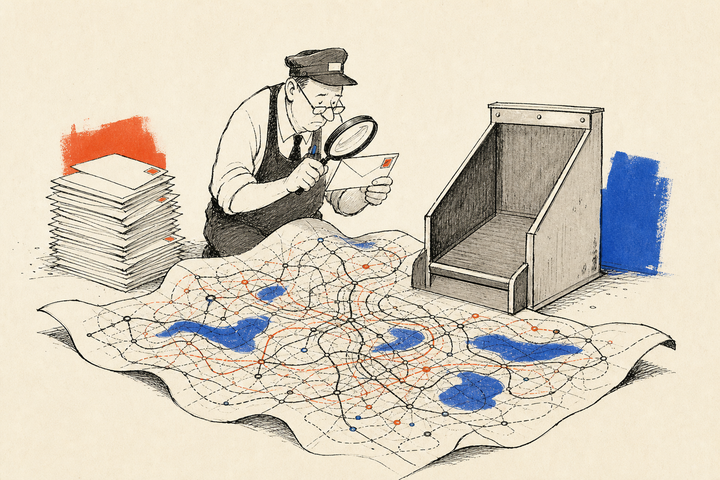
Building the wrong product taught me what I actually wanted. I realized that I did not need to reproduce Claude's interactive experience myself. I needed a clean interface between my budgeting data and an already-good agent experience. So I built an MCP around the budgeting API instead. Around the same time, newer frontier models became available. Combining the MCP with a better model produced a smoother experience with far less custom machinery.
This was not an improvement to the original system. It was a different approach. Sometimes the expensive part of AI work is discovering that you chose the wrong abstraction. The first version consumed tokens, time, attention, and energy. The code technically worked enough to exist, but the total cost per useful outcome was terrible. The later approach worked better partly because I delegated less infrastructure and exposed better primitives to a stronger model.
What accepted outcome actually means
The AI industry is chasing the wrong number. Providers compete on intelligence per token, cost per million tokens, and benchmark scores that measure raw power.
The product is not tokens. The product is an accepted outcome: work the business can use without review, fixes, or the risk that something goes wrong.
For software, an accepted outcome includes whether I can understand and maintain what was created. A code change that passes today but leaves behind structure nobody understands is not a successful outcome. A feature that technically satisfies the prompt but creates a terrible user experience is not a successful outcome. An agent that produces the requested result but requires three rounds of cleanup is not equivalent to one that produces maintainable work on the first attempt.
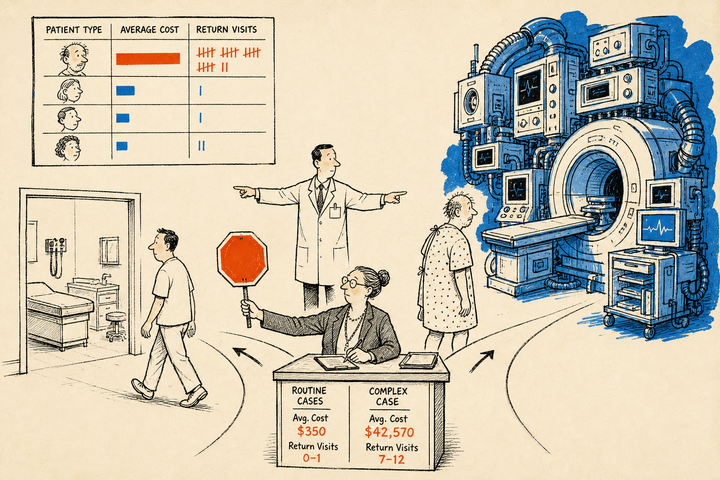
The number that matters is total cost per accepted outcome. That includes inference, the platform overhead, automated checks, human review, rework, upkeep, and expected failure cost. That equation changes strategy across the entire AI stack.
Consider the full workflow. An agent drafts a customer response or generates code. The inference cost is the API fee. The platform cost is the tooling and integration overhead required to direct the agent and handle its output. After that comes checking: automated tests confirming the output meets requirements. Then review: the time a person spends reading, correcting, or redoing the work. Finally, failure cost: the weighted average of incidents the model creates. Wrong customer messages. Broken code. Compliance violations. Security holes.
Add those together and you see what you actually paid for the outcome. A cheaper model with higher failure rates can easily cost more than an expensive model that works the first time. The current market does not price models this way, which means most companies are making buying decisions on incomplete information.
When using a model for a standard task costs roughly one cent even when training runs cost millions, raw model scale is no longer the binding constraint.
The constraint has moved
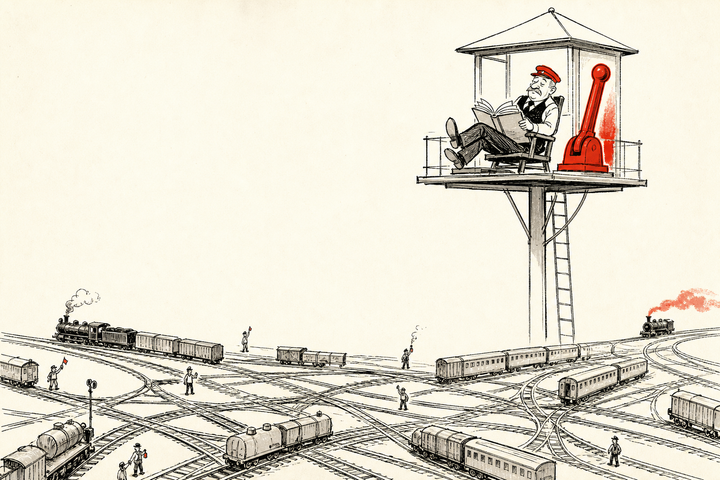
AI makes producing code almost free, but understanding systems is not becoming free at the same rate. That is the collision.
When writing code was expensive, the rate at which software could be created naturally limited complexity. With agents, production can outrun comprehension. The scarce resource is not the ability to produce code. It is the ability to maintain a coherent mental model of what has been produced and determine whether it actually serves the intended outcome.
I trust agents to create syntax much more than I trust them to make design decisions. I do not trust an agent to design the structure, choose the right third-party library, understand which dependencies are worth pulling in, optimize for my cost constraints, optimize for maintainability or speed, or decide for itself when the job is finished.
This is why spec-driven work and test-driven work matter more to me now. The model can fill in enormous amounts of code. But I want explicit boundaries around what finished means, what interfaces should exist, what behavior is required, and what evidence proves the work is correct.
I have learned not to judge an agent by whether it got the answer right. I care about what it left behind.
Do I understand the structure? Did it pull in dependencies I would have chosen myself? Can I tell when it is finished? If something breaks tomorrow, do I know enough about the system to fix it without asking the same agent to explain its own work back to me?
The easier it becomes to generate every layer of the stack, the more important it becomes to understand which parts of the stack actually matter to the outcome. I do not have to personally type every line. But delegation is not abdication.
What this changes for model providers and platforms
Competing on intelligence alone becomes insufficient. A frontier model that scores highest on MMLU or beats every other model at coding benchmarks still loses if companies cannot trust its output enough to reduce how much they check it.
Agent platforms currently compete on what they can do: how many tools an agent can use, how complex a workflow it can execute, how autonomous it appears. The more important question is how much babysitting the platform eliminates. An agent platform that requires a human to review every output before it reaches production has not reduced labor cost. It has added coordination overhead.
A company will not let an agent send customer emails, approve refunds, modify production code, or generate financial reports unless it trusts the system to operate within known limits. Continuous assurance and ongoing red-team testing expand the set of tasks companies will authorize because they lower the risk of something going wrong and the burden of constant watching.
Intelligence determines what an AI system can attempt. Assurance determines what an organization is willing to delegate.
The next bottleneck in enterprise AI may not be generation. It may be authorization. Can the model write the email, or can the company let it send it? Can it generate the code, or can it merge it? Can it recommend a refund, or can it approve it? Can it generate a report, or can the business publish it?
Even on my own projects, there are areas where I am comfortable granting autonomy and areas where I want hard boundaries. Syntax? Often yes. Structure? Much less often. Completion criteria? I want tests and specs. Third-party dependencies? I want scrutiny. That is the individual-developer version of the same authorization problem enterprises face at scale.
What this changes for how companies evaluate AI
Evaluating models in isolation produces incomplete cost estimates. A procurement process that compares inference prices, runs a few benchmark tests, and picks the cheapest option is measuring the wrong thing.
The correct approach is a workflow analysis. Take a real task the business wants to automate. Measure the inference cost, the platform and integration overhead, the checking and validation layer, the human review burden, and the expected cost when something breaks. Run that analysis across multiple models and multiple task types. The model with the lowest total cost per accepted outcome wins, even if its inference price is higher.
This matters most in high-stakes environments. A model that occasionally generates wrong financial summaries, writes broken code, or sends inappropriate customer messages creates costs that dwarf any savings from cheaper inference. Companies operating in regulated industries, handling sensitive data, or building customer-facing systems cannot afford models that require constant watching. They need models that work predictably within known limits.
Reports suggest roughly 95 percent of enterprises see no measurable ROI from AI deployments. That is 95 percent. They deployed without thoughtfulness, risk controls, or guardrails. Companies that get this right strike a balance between enablement and constraint. They automate where the cost of failure is low and move more carefully where mistakes carry consequences. That requires knowing which tasks fall into which category, which most organizations have not thought through.
The counterargument
Raw intelligence and token efficiency still matter. Pushing the frontier of what models can do enables new tasks that were previously impossible. A model that can reason through novel scientific problems, write complex software, or synthesize large bodies of evidence creates value that no amount of checking can replicate if the underlying intelligence is insufficient.
You can have all the raw capability in the world, but if deploying it means hiring people to watch it, you have not automated anything.
The businesses winning with AI today are not using the smartest models. They are using models they can trust to operate within defined limits, produce consistent results, and fail gracefully when they hit something outside their training.
Most companies are stuck proving basic reliability, not exploring the frontier.
What this means
AI has made producing work cheaper. It has not made deciding whether that work is good cheaper. Sometimes it has made that decision harder because production now happens faster than humans can maintain context. That is why inference price alone is a poor economic metric.
The real cost of AI includes the work required to understand what it produces, then decide whether it works, then fix it when it does not. I have experienced this myself while building software. The most autonomous-looking workflow was often not the one that produced the best result. I got better outcomes when I defined the important pieces of the system, constrained the agent around them, and let AI accelerate the code between those boundaries.
Evaluate AI investments on total cost per accepted outcome rather than inference cost or benchmark performance. Focus on providers and platforms that reduce the time spent checking, reviewing, and recovering from mistakes. Build systems with audit trails, constraint enforcement, and failure detection from the beginning rather than adding them later.
A model that completes one hundred tasks without someone watching is more valuable than a model that completes one hundred and fifty tasks but requires review on every one.
Model capability keeps improving. Every major provider is releasing cheaper, faster, more capable models. The scarce resource is not what models can do. It is whether you can trust them to do it.