Kimi-K3 and the End of Model Selection as Strategy
Yesterday at Atlanta Tech Week, I met two founders building custom AI models for companies. Their pitch: pay them a five-figure fee, they train a model on your data for your use case, trading algorithms, customer service, compliance review, and you own the weights. You run it on your infrastructure. Your IP. Your security perimeter. No API dependency.
Six months ago, that would have been theoretical. The gap between what you could build yourself and what you could rent from OpenAI was too wide to make ownership worth the trouble.
After Kimi-K3, that gap closed faster than most people expected.
I think the most underpriced part of K3's release isn't its benchmark performance. It's what becomes possible when an open-weight model ships at this scale. Moonshot AI released a 2.8 trillion parameter MoE with 1M-token context, built for long-running agent work, with open weights. That changed what people thought was buildable outside closed labs.
Companies stop asking which model is best when an open-weight option gets close enough. They start asking who controls it.
The Inevitability Threshold
Linux didn't have to beat Windows. It had to become good enough that freedom, the ability to modify it, and network effects outweighed the gap. Once it crossed that line, call it 95% of what most workloads needed, the question changed from "Is it the best operating system?" to "Why should I accept someone else's kernel?"
K3 crossed that line for AI models. Not identical performance to frontier labs. Close enough that the question flipped.
I think that's the shift people are underpricing. Once an open model reaches roughly 95% of what the frontier labs ship, something strange happens. The question stops being "Is it the best?" and becomes "Why should I accept someone else's platform?"
At that point, network effects take over.
The capability floor for open-weight models moved upward fast enough that other research labs will reach the same place whether or not any single team took shortcuts. That floor doesn't retreat.
Developers and Companies Split
Developers immediately understood why K3 matters. They get inspectable weights, self-hosting, fine-tuning, and custom inference stacks. They can run as many tests as they want without rate limits or API bills.
That's freedom.
Buyers inside companies are asking different questions: Can we trust it? Can we deploy it internally? What are the legal risks? Will governments regulate its use? Those are legitimately harder to answer when geopolitical tensions are baked into the discussion.
Both discussions are now happening at once, which creates the opening for strategic bets most companies haven't yet considered. I would not bet on the compliance concerns outweighing the strategic advantages for long. The first serious company that deploys K3 internally and proves it works will force every competitor to explain why they're still renting intelligence from a vendor.
Those two founders I met at Render? They're betting companies will pay to own the model rather than lease access to someone else's. The use cases they described, trading strategies, regulatory compliance workflows, customer service for industries with strict data residency rules, all share one thing: the intellectual property or regulatory constraint makes API dependency unacceptable.
Open-weight models at this capability level make that pitch work. Not because Moonshot built a perfect model, but because they proved the floor moved.
The Real Threat Is to Platforms
K3 doesn't primarily threaten OpenAI or Anthropic. It threatens inference providers, AI hosting businesses, and platforms whose entire value is "we give you an LLM."
Because now every serious company can ask: Why are we paying someone else to run this when we could run it ourselves?
When a model release affects semiconductor and AI stocks, investors are pricing in platform risk. The market understood before most operators did: the moat is moving.
I think we're entering the Kubernetes phase of AI. Early cloud computing competed on which VM was fastest. Eventually nobody cared about the VM. They cared about how you scaled it, governed it, and moved between providers. Kubernetes became more valuable than individual Linux distributions because it solved the layer above the commodity.
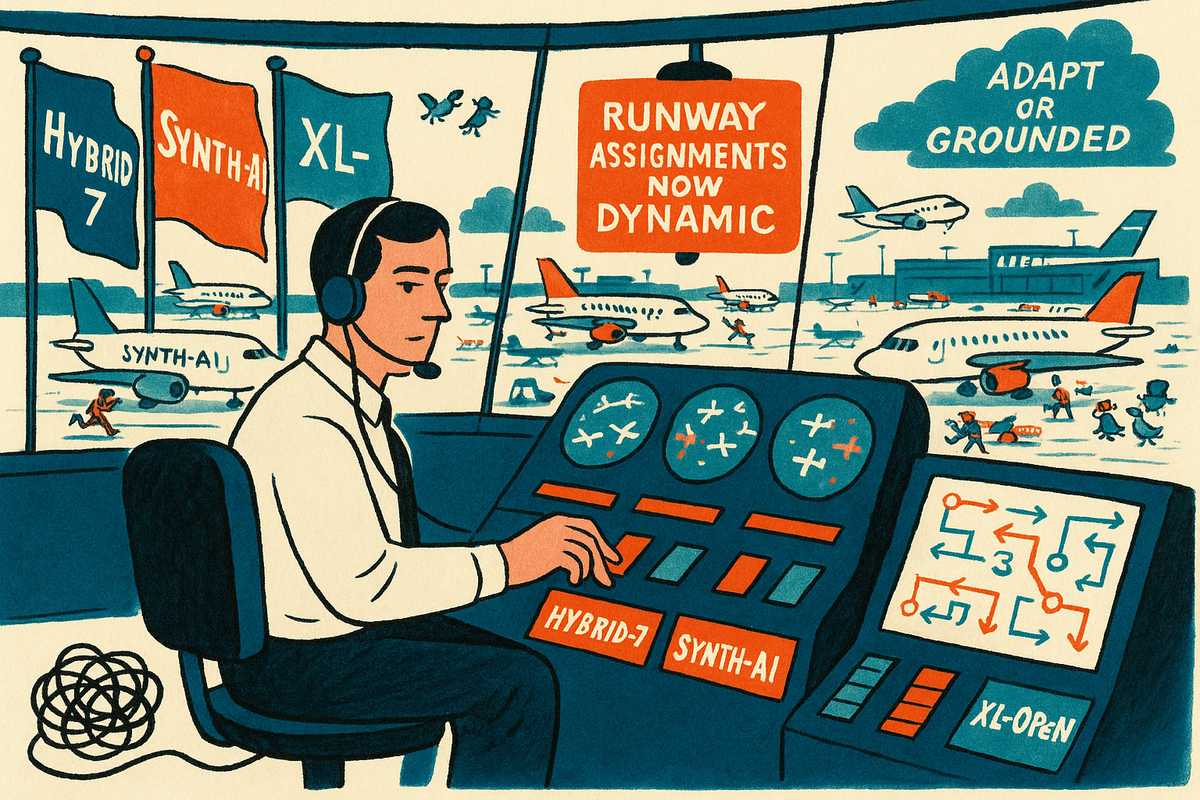
Five years from now, you'll compare systems for routing requests, managing memory, running evals, and enforcing compliance instead of comparing Claude, GPT, and Gemini. The underlying model becomes swappable rather than the product itself.
The moat shifts from "Our model is smarter" to "Our platform handles model transitions, cost control, routing, and compliance better than yours."
That's not theoretical. It changes where you spend time.
Where Engineering Effort Moves
If open models with near-frontier performance become commoditized, you stop asking "Which model should we buy?" and start asking "How do we build a system that can swap models every quarter?"
In practice, that means building:
Eval pipelines that work across multiple models and providers, not prompt collections tuned for one API. You need to know which model actually performs better on your workload, not which one the vendor claims is smarter.
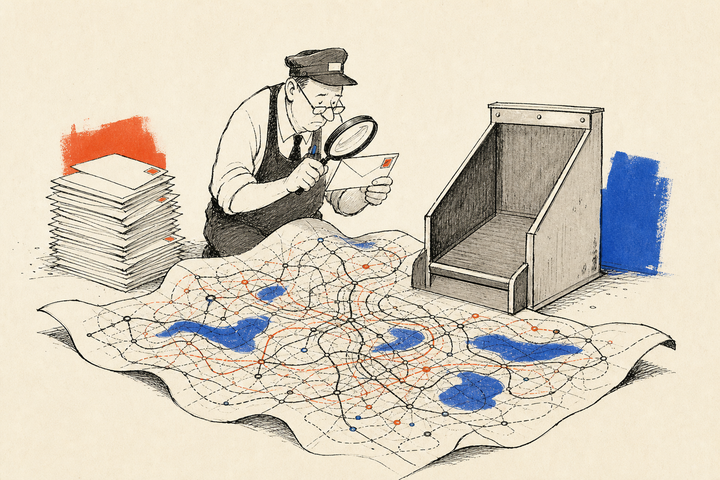
Routing logic that directs tasks to the most cost-effective provider based on actual performance, not vendor preference or sunk API costs.
Memory and context management that persists across model changes rather than coupling what your app remembers to a specific vendor's API design.
Observability that tracks performance, failure modes, and cost independently of which model ran the request.
Governance rules that enforce compliance regardless of the underlying model, because regulations care about outcomes, not which API you called.
Agent systems that abstract individual APIs so you can switch providers without rewriting everything.
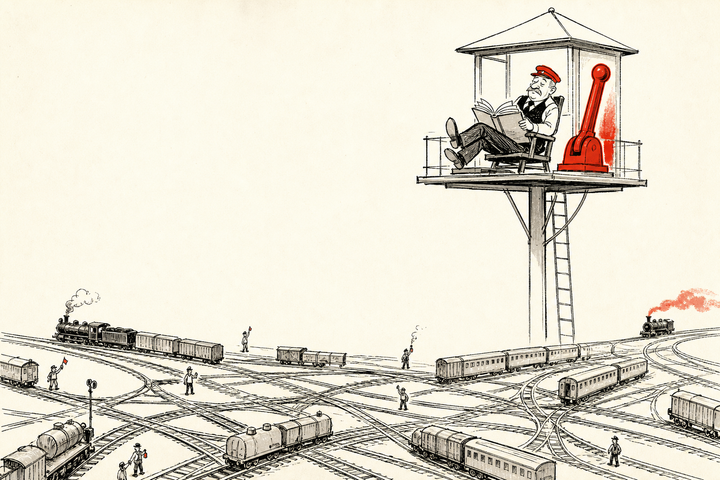
This is the shift most engineers are underpricing. They're tuning prompts when they should be building systems that treat models as swappable parts. Most teams haven't started solving this yet, and the teams that do will have architectural leverage their competitors won't.
The counterargument is real. Closed models may still offer better performance, safety features, integrations, and vendor support. Companies often prioritize reliability over control. Some analysts called the market reaction an overreaction.
I don't think K3 needs to win that argument everywhere. It only needs to win it often enough that treating any single model as a permanent moat becomes strategically risky. If your AI strategy assumes GPT, Claude, or any single vendor remains essential, K3 just gave you a reason to reconsider that bet.
Not because Moonshot built a better model, but because the floor moved upward and betting against commoditization now looks expensive.
You should stop tuning prompt collections and start building composable AI systems. The companies that figure that out first will have options their competitors won't. Those two founders building custom models? They're not betting on which model wins. They're betting on a world where companies choose ownership over dependency. That bet just became considerably safer.