The Building Trap: Why Capable Founders Solve the Wrong Problem

When an experienced investor who has reviewed thousands of pitch decks analyzes where founders actually fail, the pattern is not weak ideas. It is weak business logic and go-to-market thinking. Plenty of product. Very little proof that anyone wants it or will pay.
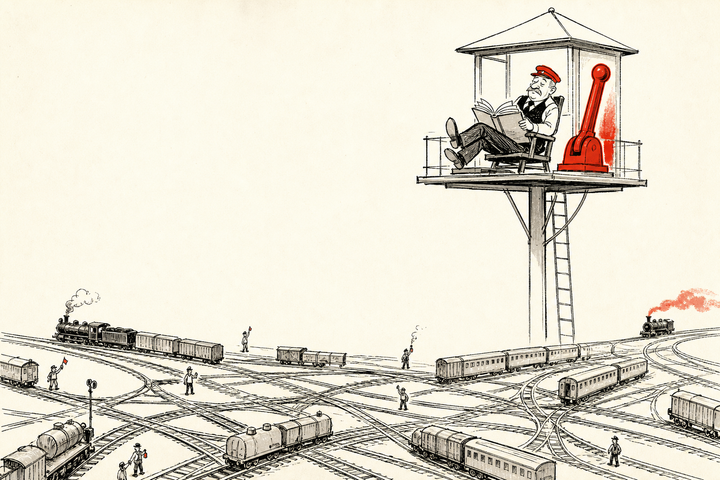
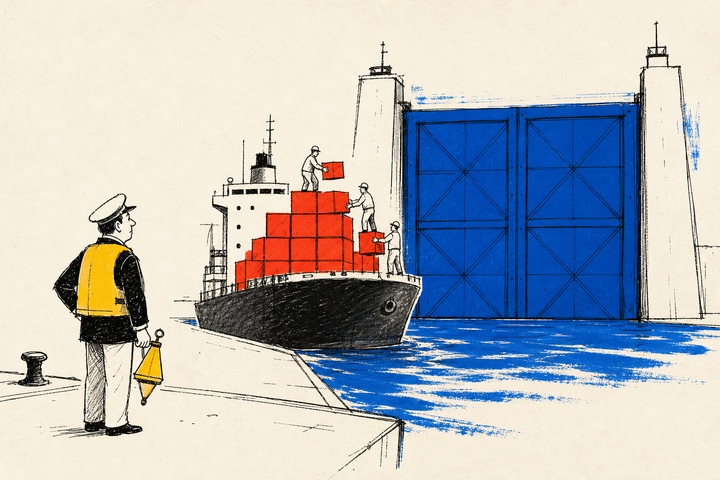
I have seen this in my own work and in every technical founder I know. You can architect a beautiful system. You can ship features weekly. None of it moves the business if no one is being actively sold, no pipeline is nurtured, no distribution partnerships are negotiated. The more you build, the better you feel, but that dopamine loop is a distraction from the constraint.
The mechanism is simpler than it looks. Code compiles or it does not. A feature ships or it does not. The feedback is tight and reliable. Sales does not work that way. You send an email and hear nothing. You follow up and get a polite deflection. You wait three weeks for a prospect who cancels at the last minute. The feedback is delayed, ambiguous, and frequently negative. So you return to the part of the job where you can see clear evidence of your competence.
This is not a personality flaw. It is a structural problem with how founder work is organized. Building generates visible artifacts on your own timeline. Distribution requires other people to care, and they mostly do not yet.
Loneliness removes the forcing function
People underestimate how isolated the founder path becomes. You cannot talk to your partner or friends about the same stalled metric for the sixth week. You cannot admit to a contractor you are not sure this is working. You end up indexing entirely on yourself, which means the decision that feels most natural is the one you already know how to do well.
When founders describe what surprised them most about the startup journey, loneliness consistently surfaces as one of the shocks. Even founders with strong personal networks feel that few people truly understand the combination of risk, responsibility, and obsession they live with.
The loneliness affects everyone, though solo founders carry it differently. In a corporate job, you have colleagues and managers who will redirect your time when you are solving the wrong problem. You have adjacent teams whose needs make your work visible. Founders do not get that scaffolding for free. They have to construct it themselves, which means they have to diagnose the absence before they know to fix it.
Most founders are people who would succeed easily in traditional employment. They left because they wanted autonomy and ownership. The cost of that choice is losing the environment that would have told them they are building the wrong thing.
The fix is external and uncomfortable
Founder communities exist to replace the forcing function that a real job provided. You need other people who will ask why you have not closed a single customer this month while you rewrote the entire API. You need someone who has been through this to tell you that your beautiful technical architecture does not matter if no one knows it exists.
The strongest founders I know did not figure this out alone. They joined communities, found mentors, built peer groups, and forced themselves into regular external accountability. Not because they lacked discipline, but because the structure of founder work makes it too easy to solve the comfortable problem instead of the important one.
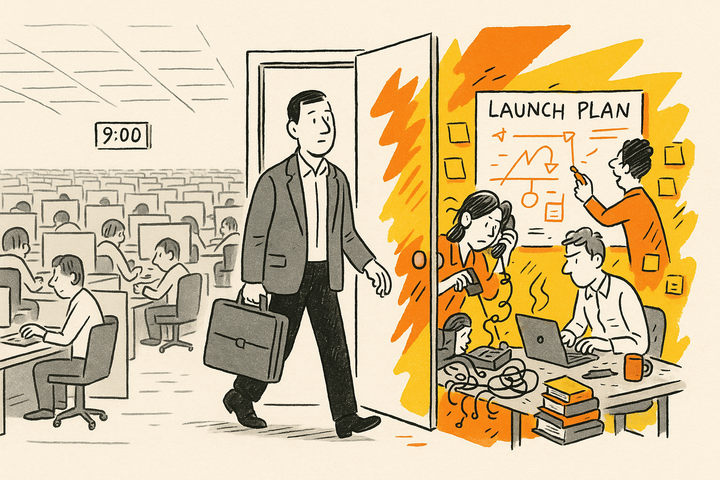
If you are a technical founder, the decision you need to make differently is this: stop treating sales as something you will focus on once the product is ready. The product will never feel ready. Start now, before you write another line of code. Make ten cold calls this week. Send twenty emails. Follow up with every conversation from last month. Do it before you refactor anything.
You will hate it. It will feel inefficient and uncomfortable. That discomfort is the signal that you are finally working on the constraint.
Building communities and external forcing functions is not a soft cultural improvement. It is the operating system that prevents capable people from spending months solving a problem no one paid them to solve.