The Cloud IDE Was Built for the Wrong User
Cloud IDEs have promised for years that developers would abandon their local setups and move into the browser. Yet 62% of developers tried a cloud IDE, but only 14% used one regularly. The gap suggests a design misalignment, not a technology failure.
I think the problem was designing for the human when the natural user is the coding agent.
A human optimizes for keyboard latency, personalized terminal setups, editor preferences, file access, and offline workflows. Moving into a browser meant trading familiarity and control for convenience that never felt overwhelmingly better.
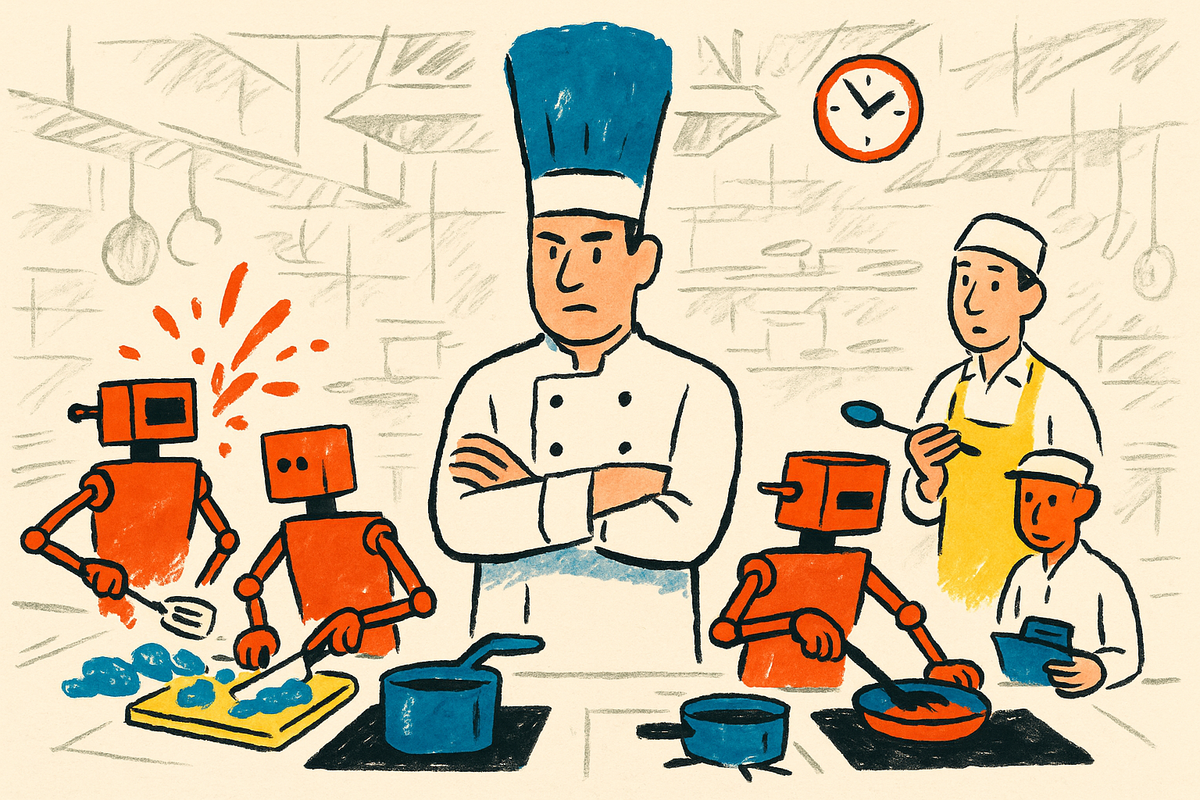
A coding agent has different requirements. It needs compute, a file tree, source code, credentials, tools, network access, containers, branches, tests, databases, and somewhere to deploy. It does not care about monitor size, Vim bindings, or whether the terminal feels pleasant. Cloud platforms give agents what they actually need.
Fifty-one percent of professional developers now use AI tools daily, with agents operating as planners, coders, testers, and reviewers across the software lifecycle. The human increasingly does not need to inhabit every corner of the workspace.
The questions become: what is everyone working on, what changed, what failed, what needs review, what is blocked.
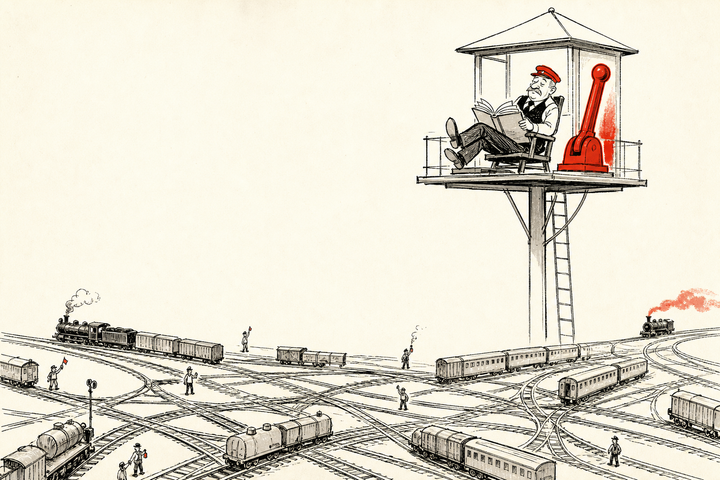
The IDE starts looking less like an editor and more like a control plane.
The constraint is shifting. AI is making syntax generation cheaper, which moves the bottleneck downstream to review, integration, testing, setup, and deployment. A startup can generate code faster than it gains the capacity to safely review, integrate, and ship it. Organizations report faster implementation but see 45% of AI-assisted deployments surface problems downstream. Those constraints will erode too, but the pattern is clear: each removed bottleneck exposes the next one.
Current coding-agent architecture feels transitional. A frontier model runs remotely, reaches into a local laptop, manipulates a local repo, runs commands, then pushes code back to cloud systems where CI, staging, and production already live. This exists because the laptop historically sat at the center of the workflow. If agents become the main actors, there is less reason for source, compute, tests, containers, and deployment to orbit the laptop.
I think the workspace becomes a more important idea than the individual editor. A workspace might contain: task, repo state, branch, container, runtime, database snapshot, scoped secrets, allowed tools, model assignment, preview deployment, logs, tests, review state, and history. A task creates its own isolated environment. An agent works inside it. Another agent inspects it. A human enters it. A reviewer requests changes. The environment maintains continuity across handoffs.
The next platform may not win because it is the nicest place for a person to type TypeScript. It may win because it is the best place for multiple software-producing agents to operate at once, avoid conflicts, inherit policy, receive scoped permissions, execute tests, deploy previews, hand off work, and expose progress to humans.
The human-facing UI starts resembling a management console. The editor becomes one drill-down view inside a larger system.
IDEs were designed when people produced code. The workspace I am describing is designed for people supervising its production. Technical leaders evaluating tooling should consider whether they are optimizing for the person typing or the agents doing work that person will review.